Vogelkamp Neugraben: Living close to nature
Total area:
70 ha
Housing units:
approx. 1.700
Leafy and open space:
approx. 7,5 ha
Industrial real estate:
approx. 15.000 m²
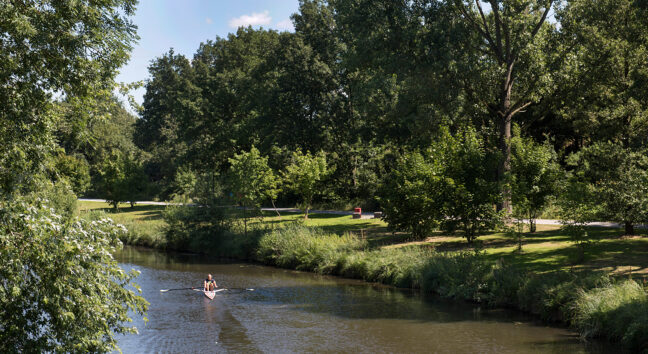
Vogelkamp Neugraben is uniquely located on the periphery of the city and in the direct neighbourhood of the ecologically important nature reserve and EU bird sanctuary of the “Moorgürtel”. At the same time, it has excellent transport links and is in the direct proximity of the centre of Neugraben (map). With the community centre BGZ Süderelbe and a large park with sports and games facilities, there is a diverse range of educational and leisure opportunities directly on site. Around 1,500 housing units will be created in a family-friendly mix of detached, semi-detached and townhouses, with some apartment buildings. With kindergartens, various local squares, a mobility station and many landscaped leafy spaces, the Vogelkamp is a liveable district on the periphery of the city. The main part of the district has already been sold and most residents have moved into their new homes.
The “Königswiesen” subarea is located in the western and southern parts of the neighbourhood, and new planning permission is currently being established for it. The plots are due to be put on the market in the coming years.
Impressions from the district


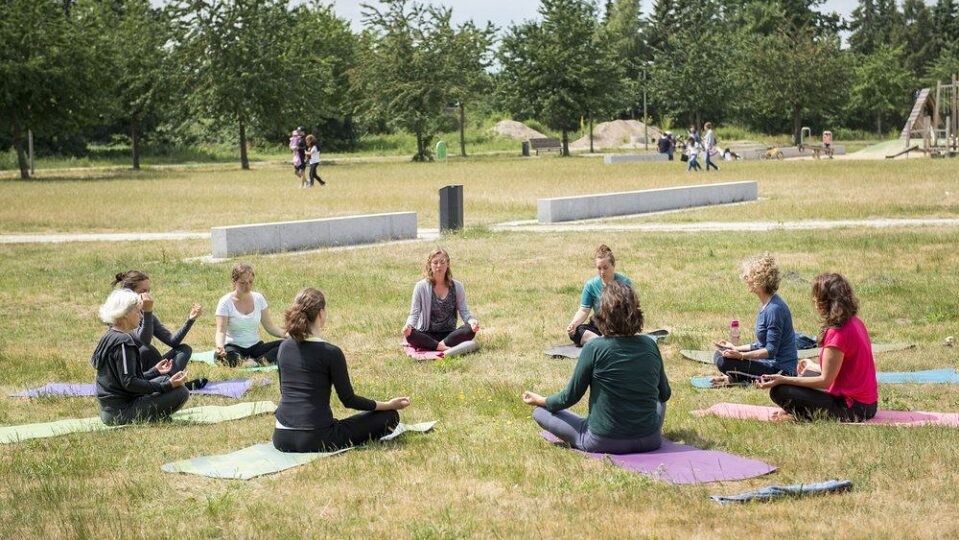



Vogelkamp Neugraben is situated in the Neugraben-Fischbek neighbourhood in the Harburg district and benefits from its location right next to Neugraben S-Bahn station. In the immediate vicinity of the Süderelbe Education and Community Centre (BGZ) lies a neighbourhood park covering around five hectares. As well as a children’s playground, the park offers a wide range of sports and leisure facilities, including a multi-purpose sports pitch for football, streetball and basketball, a beach volleyball court and a publicly accessible obstacle course.
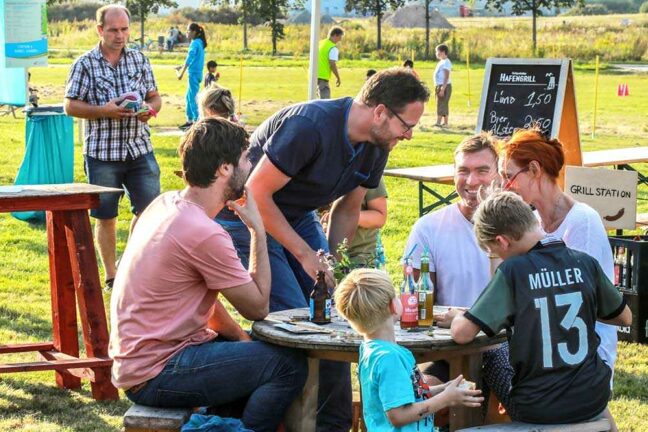
In terms of urban design, the neighbourhood is characterised by the central neighbourhood park and three neighbourhood squares. Together with the neighbourhood squares scattered throughout the residential area, these form important meeting places and spaces for interaction for residents. To the north, the neighbourhood opens up onto the surrounding countryside and the nature reserve via further neighbourhood squares. This creates spacious open spaces offering excellent recreational value.
In recent years, around 1,550 residential units have been built in Vogelkamp Neugraben. A key component of the development was the allocation of numerous plots for detached houses to families who now characterise the neighbourhood. To ensure high standards of urban planning and architecture, and to foster stable neighbourhoods, specific quality standards were applied when allocating the plots (see also ‘Quality in the detached housing sector’).
Looking ahead, there are plans to develop further residential land in the southern and western parts of the neighbourhood. Around 400 additional residential units are to be built there (see also ‘Königswiesen sub-area’).
In the course of developing the new Vogelkamp Neugraben residential district, it has become apparent that the Königswiesen sub-area – covering a total of around 8.1 hectares to the south and west of the Vogelkamp Neugraben district – requires re-planning and infill development. Against this background, a new local development plan procedure (Neugraben-Fischbek 75) is also required. The aim is for the development plan to be ready for preliminary approval by 2027. In 2022, an urban planning competition was launched to identify the best possible solution for the many constraints within the planning area. In early 2023, a jury selected the first-prize winner. Based on this entry, functional planning followed, which now forms the basis for the development. In total, around 400 residential units are to be built in blocks of flats and terraced houses. Marketing of the first plots is expected to begin in 2027.
Respectful treatment of nature: learning – living – increasing neighbourliness
For Vogelkamp Neugraben (as for Fischbeker Heidbrook) the IBA Hamburg has developed the brand “Living close to nature”, derived from the area’s proximity to two large nature conservation areas. More than just a slogan, it also reflects an attitude, intending to stimulate the appropriate treatment of nature and the formation of neighbourhoods. This is why educational offers and neighbourhood activities were promoted from the outset. Of course, living close to nature also plays a role in the overall development of the district in many areas (housing, open space, mobility, energy efficiency).
Here are a few examples:
Cooperation with the Nature and Biodiversity Conservation Union (NABU):
- Informative event on nature-promoting garden design together with the Nature and Biodiversity Conservation Union (NABU) – from insect-friendly plant selection to swallow nesting boxes on the bike shed (yearly)
- Welcome package with NABU information material on topics related to nature
- Construction of a nature learning trail on urban nature and the nature conservation area together with the NABU
- Family tours through the Moorgürtel nature conservation area by NABU (yearly)
- Installation of a stork eyrie
Education and information offers:
- Information event on rainwater management and near-surface drainage on private plots (yearly)
- Children create a bee-friendly flower meadow in Vogelkamp Neugraben
- Regular information on selected themes in the newsletter
Living close to nature in district development
The following requirements and regulations have been determined for both districts in order to achieve the goal of a sustainable residential district of lasting value:
- Near-surface drainage with troughs and channels offering habitats for plants and animals and strengthening the natural water cycle
- As little land sealing as possible on private plots and public space
- Energy standard of all new-builds is at KfW 55 or better.
- Connection of all new-builds to a heating network with cogeneration/waste heat
- Offers for electric carsharing
- Native plants as hedging to enclose the plots, offering habitats for animals
- Securing the stock of trees by a variety of measures
- New tree planting on all plots, public spaces and streets
To ensure the quality of neighbourhood development in the detached housing sector as well, to create a harmonious neighbourhood of high architectural quality, and to foster stable communities, two specific approaches were developed and implemented for the Vogelkamp Neugraben project: the ‘Architecture Exchange’ and the ‘House Catalogue’. As part of the ‘Architecture Exchange’, the purchase of a plot in the second construction phase was linked to the realisation of an architectural design.
With this process, used for the first time here in Hamburg, the focus was transferred from pure plot acquisition to the realisation of high-quality and affordable architecture. Seven architectural offices created a total of 14 designs for apartment buildings and townhouses, semi-detached and detached single-family homes. The participating architectural practices included BEL, DFZ ARCHITEKTEN, Prof. Hirche Architekten, Wacker Zeiger Architekten, czerner götsch architekten, Heyden und Hidde Architekten and the Plan-R architectural practice of Joachim Reinig.
The house catalogue is a further development of the architectural exchange and was used in subsequent construction phases. The aim was to offer clients more choice and simplify the process, whilst still ensuring quality.
The catalogue featured homes offered by prefabricated house suppliers that were ready to move into and met the quality and design standards required for the neighbourhood development. All designs met the KfW 55 energy standard or better. The proposals were selected by a high-calibre selection panel comprising representatives from various public authorities and independent architects. As well as building one of these houses, there was also the option to submit an application based on one’s own architectural design. A design advisory board, also comprising representatives from various authorities and independent architects, monitored the quality of the designs and decided whether they could be built in the neighbourhood.
The architectural exchange and the house catalogue will no longer be used for further projects in the area. However, IBA Hamburg continues to ensure that the design specifications are adhered to through quality control.
Living close to nature
What happens next?
The next step will be to market the first development plot in Königswiesen, which can begin once the Neugraben-Fischbek 75 local development plan process has been finalised.
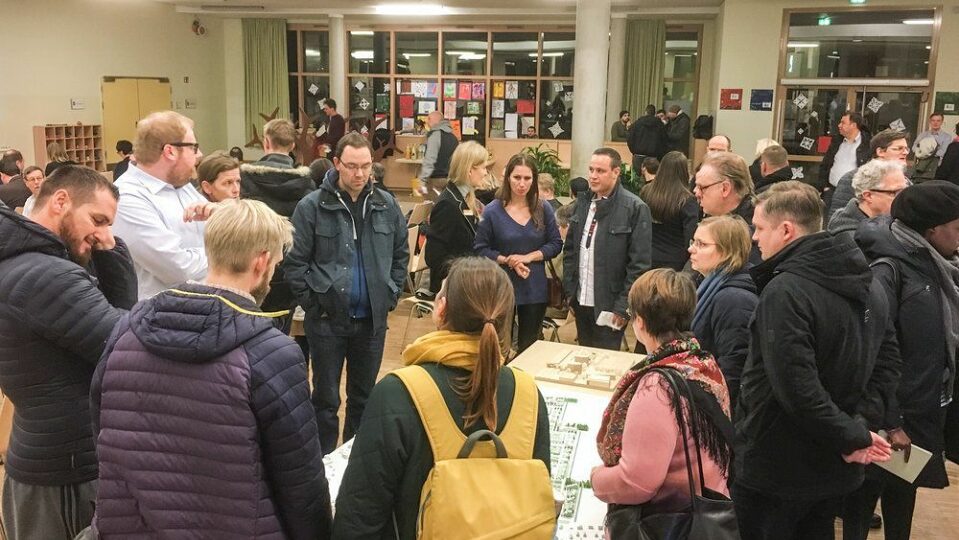
The IBA Hamburg provides yearly information in the form of a public project dialogue on the current state of planning and answers questions from citizens.